

Okay, so check this out—browser-extension wallets are the way most of us interact with DeFi day-to-day. They’re quick, usually lightweight, and fit right into your browser workflow. I’ll be honest: some parts of this space still bug me, like permission sprawl and sketchy extensions pretending to be legit. But Rabby Wallet has earned a spot on my short list because it focuses on EVM chains, permission control, and developer-friendly features without too much fluff.
First things first: if you want to get Rabby Wallet, you can grab it from here. Seriously — pause and make sure you downloaded the official extension. Scammers copy names fast, so verify the publisher and reviews before you install.
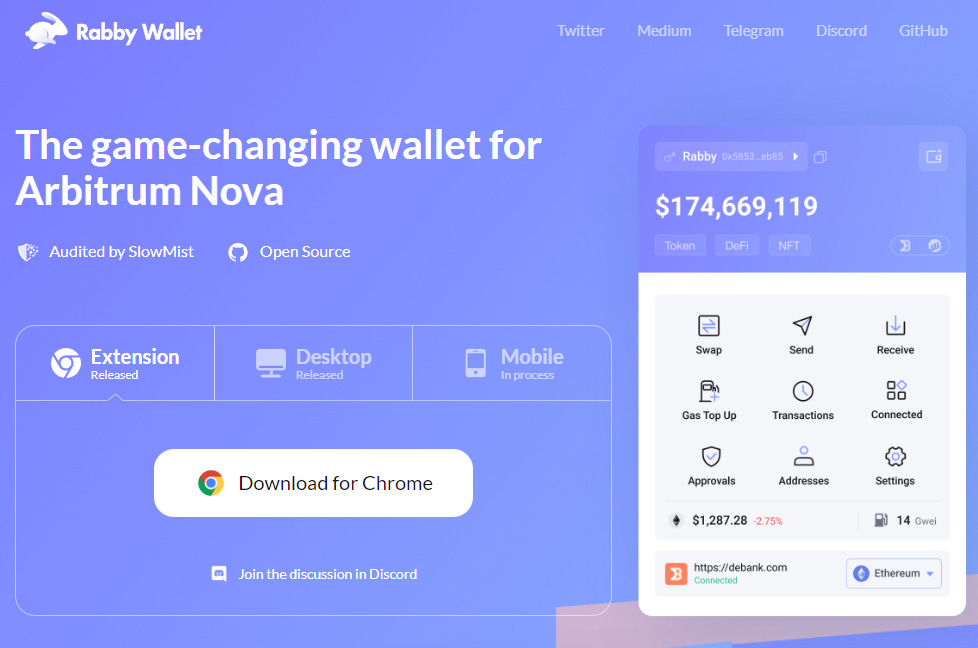
Why choose Rabby Wallet (short answer)
Rabby focuses on Ethereum and EVM-compatible chains and offers some nice safety-first features: permission management for dApps, transaction simulation, and easy hardware wallet integration. It’s not the flashiest UI out there, but it’s practical. My instinct says it’s designed for people who care about avoiding costly mistakes — that matters.
Step-by-step: download and install
1) Open your browser (Chrome, Brave, Edge, or Chromium-based).
2) Search for Rabby Wallet in the official extension store or follow the official link above. Look for the verified publisher and a solid number of installs. Don’t install from random sites. This seems obvious, but people still do it.
3) Add the extension, then click the extension icon and choose “Create a new wallet” or “Import wallet” if you already have a seed phrase. Creating a new wallet will generate a 12- or 24-word seed (mnemonic).
4) Backup your seed phrase immediately. Write it on paper. Store it in a safe, offline place. Don’t screenshot it. Don’t upload it to cloud storage. Seriously, don’t.
5) Set a strong password for the local extension lock. This doesn’t replace a seed phrase backup, but it helps protect the extension on your machine.
Key features to use right away
Permission manager — Before you connect to a dApp, Rabby shows the exact permissions requested. You can limit access to specific accounts or deny aggressive requests. This reduces attack surface when a site asks for unlimited token approvals.
Transaction simulation — Want to see what a transaction will actually do? Rabby can simulate the transaction, helping you spot unusual behavior before signing. That’s useful, though not foolproof.
Hardware wallet support — You can connect Ledger or other supported devices, keeping your private keys offline while using the extension as a signer. This is one of the best ways to improve security for larger balances.
Network & token management — Add custom networks (BSC, Polygon, etc.) and manage token lists. Rabby is built around EVM compatibility, so chains and dApps tend to integrate smoothly.
Security best practices
Never share your seed phrase or private keys. If a site or person asks for them, walk away. My gut always flares up when a dApp suddenly asks to export keys — that’s a red flag.
Use a hardware wallet for big holdings. If you keep small daily balances in a hot wallet for convenience, limit approvals and disconnect dApps after use.
Review contract approvals often and revoke any you don’t recognize. Even if you trust a dApp today, token approvals can linger and get abused later.
Keep your browser and OS updated. Extensions live inside a host environment; a browser exploit can still cause trouble.
Common pitfalls and how to avoid them
Phishing extensions — Some malicious extensions mimic names and icons. Check the publisher and extension ID, and prefer official stores. If something looks off in the install flow, don’t proceed.
Unlimited token approvals — DApps ask for “infinite approval” because it simplifies UX for them, but it’s risky. Use single-amount approvals or revoke after use.
Auto-connecting sites — Disable or be careful with auto-connect. Always choose which account you connect with and double-check permissions.
When Rabby isn’t the right fit
If you need multi-account multisig on-chain governance for an organization, you might prefer a dedicated multisig wallet (Gnosis Safe, etc.). Rabby is focused on personal and developer workflows. Also, if you prefer a mobile-first experience, a mobile-native wallet might feel smoother.
FAQ
Is Rabby Wallet safe?
Rabby implements sensible security features (permission controls, hardware wallet support). Safety depends on how you use it: secure your seed, use hardware wallets for large holdings, and stay vigilant about permissions and extensions.
Can I restore my wallet on another device?
Yes. Use your seed phrase to import the wallet into Rabby or a compatible wallet. Restore only from the official extension and keep your seed phrase private.
Which chains does Rabby support?
Rabby supports Ethereum and many EVM-compatible chains. You can add custom RPCs for other networks if needed. Check the UI for supported defaults and add networks manually when required.
Does Rabby work with Ledger?
Yes — Rabby supports hardware wallet integration so you can use Ledger to sign transactions while the extension handles the dApp connection. This significantly improves security for higher-value accounts.